


The complete history of the automotive radiator is a perfect mirror that reflects the entire 130-year evolution of the automobile itself, tracing back to the very first self-propelled motor vehicles that struggled to travel more than a handful of kilometers before their primitive, uncooled engines overheated completely and seized solid. Karl Benz’s 1886 Patent-Motorwagen, widely recognized as the first true mass-produced automobile, used nothing more than a simple unpressurized solid copper water tank mounted directly behind the engine, with no dedicated heat exchange core, forcing drivers to stop every 3 to 5 kilometers to refill water lost to rapid boiling and evaporation. By 1901, the first honeycomb-style radiators entered limited mass production, constructed from thousands of tiny thin-walled brass tubes soldered together into a dense grid that dramatically increased total surface area for heat transfer, allowing early cars to travel for dozens of kilometers without needing to stop and top up coolant. These highly polished brass radiators quickly became iconic design features in the 1920s and 1930s, with luxury brands like Rolls-Royce, Duesenberg and Cadillac turning their front-mounted radiators into exclusive status symbols, framing them with ornate hand-finished chrome grilles that served as the visual centerpiece of the entire vehicle’s front fascia.
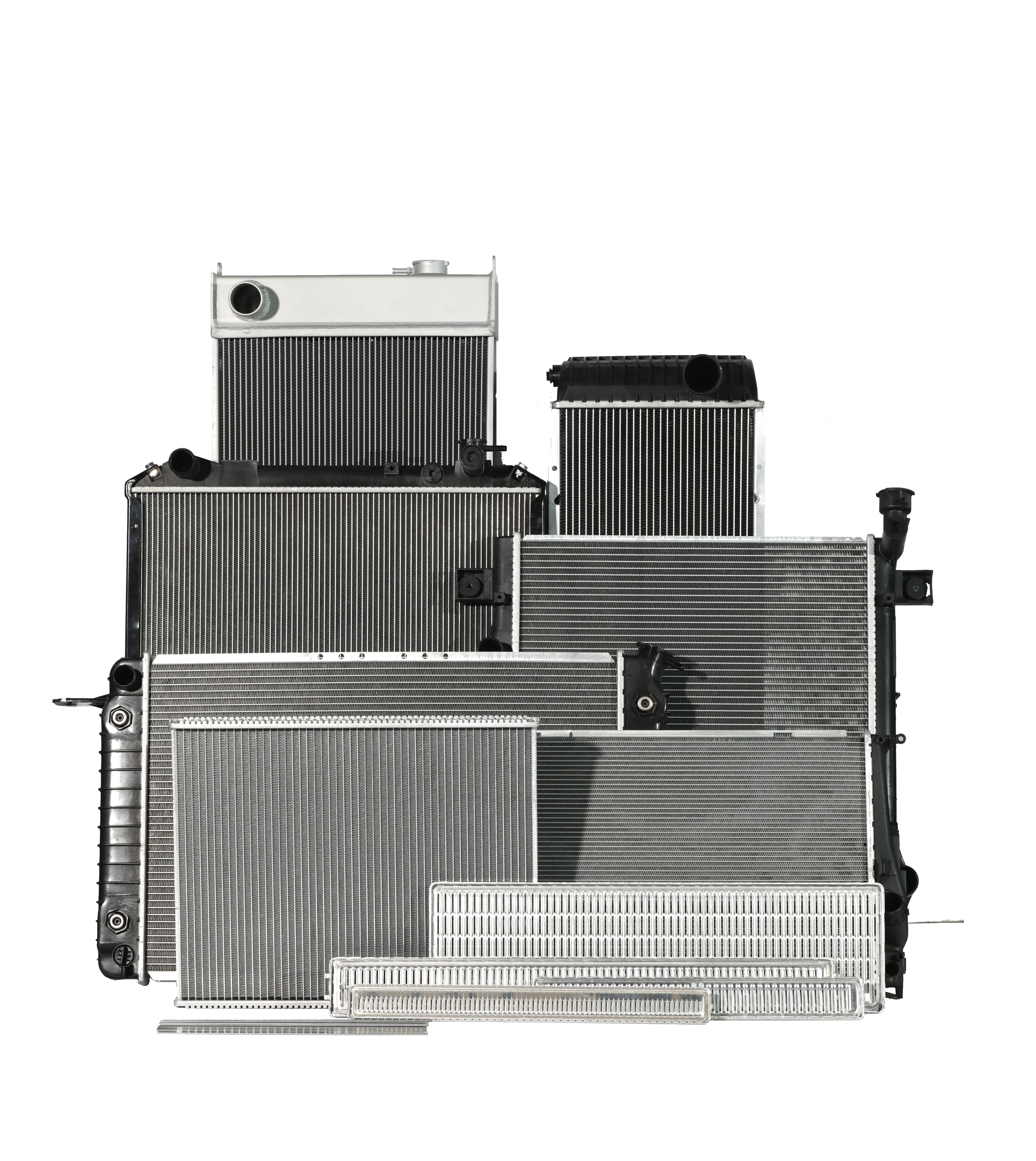
The single most transformative shift in radiator design arrived in the 1970s, driven by the global oil crisis and new strict automotive emissions regulations that forced manufacturers to reduce overall vehicle weight to improve fuel efficiency and cut exhaust pollution. Engineers began replacing heavy, slow-to-produce copper-brass core assemblies with lightweight aluminum, cutting the total weight of a typical family sedan radiator by nearly 50% while simultaneously improving long-term corrosion resistance and boosting thermal conductivity by more than 20%. This era also saw the widespread adoption of standardized pressurized radiator caps, which raised the system’s internal operating pressure to 1.4 bar and lifted the boiling point of standard mixed coolant to over 125 degrees Celsius, eliminating the longstanding, frustrating problem of steam venting out of the system during sustained high-speed driving on hot summer days. By the early 2000s, advanced computer-aided fluid dynamics design allowed engineers to optimize the exact shape of radiator cooling fins with precision-cut angled louvers that disrupt the insulating boundary layer of stagnant cool air sticking to metal surfaces, boosting overall heat dissipation efficiency by more than 35% compared to flat unmodified fins. Today’s latest production radiators are no longer single-function components: they integrate multiple separate independent cooling circuits for turbocharger intercoolers, hybrid system power electronics, and electric vehicle battery thermal management, evolving from simple passive heat exchangers into centralized smart thermal hubs that dynamically adjust cooling performance in real time based on live data from dozens of vehicle temperature and speed sensors. This 130-year timeline of relentless, incremental innovation proves that even the most seemingly mundane under-hood components have undergone decades of refinement to keep pace with the rapidly advancing performance and regulatory demands of the global automotive industry.
Post time: Jul-16-2026