


Despite their rugged, heavily over-engineered construction, automotive radiators are vulnerable to a set of predictable, mostly preventable failures that leave millions of drivers stranded on roads every single year, and almost all of these issues develop slowly over months or years with clear early warning signs that most casual motorists completely ignore. The single most common failure mode is internal clogging, caused by the gradual buildup of rust particles, mineral deposits from hard tap water, and degraded coolant sludge that accumulates inside the narrow 2mm-wide radiator tubes, slowly restricting coolant flow until the system can no longer carry away enough heat during 40-degree Celsius summer weather or when climbing steep mountain roads while towing a heavy trailer. External blockages are equally destructive: road dust, crushed insect bodies, small bits of plastic debris, and corrosive salt from winter road treatments get trapped in the delicate gaps between cooling fins, blocking 30% or more of the total airflow across the core and creating localized hotspots that weaken the thin aluminum until it cracks and springs an unexpected leak. Many drivers also overlook the slow degradation of rubber radiator hoses, which develop tiny invisible micro-cracks on their inner surface over time, allowing small amounts of coolant to leak out gradually until the system runs low on fluid and triggers a sudden, unplanned overheating event with no prior obvious symptoms.
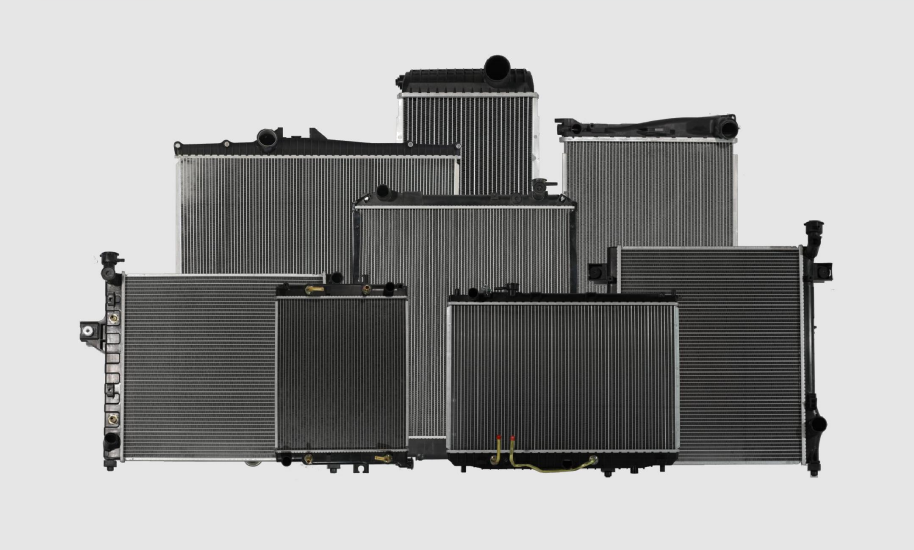
The good news is that more than 90% of all radiator failures can be completely avoided with simple, low-cost regular maintenance that takes less than 90 minutes every two years. The single most critical step is to fully flush the entire cooling system and replace the old, chemically depleted coolant according to the vehicle manufacturer’s recommended schedule, rather than just topping up the overflow reservoir with plain tap water, which introduces corrosive calcium and magnesium minerals that will accelerate internal clogging and lower the coolant’s boiling point to dangerous levels. Drivers should also inspect the external surface of their radiator at every oil change, using low-pressure compressed air directed from the back side of the core to blow out trapped dirt and debris, taking great care not to bend the thin delicate cooling fins, which would permanently reduce airflow efficiency. It is absolutely essential to never attempt to open a radiator cap while the engine is still fully hot, as the superheated pressurized coolant inside can instantly spray out and cause life-threatening scalding burns covering large areas of exposed skin. For drivers who regularly tow heavy trailers, drive in regions with extreme summer temperatures exceeding 40 degrees Celsius, or use their vehicles for harsh off-road adventures, upgrading to a high-performance radiator with extra core thickness and additional cooling fins provides a critical extra safety margin against unexpected overheating. By following these straightforward, low-effort care practices, most drivers can extend the service life of their radiator well past 160,000 kilometers, eliminating the risk of preventable breakdowns and ensuring their engine runs reliably for hundreds of thousands of kilometers.
Post time: Jul-16-2026