


Kenworth and Mack Class 8 heavy-duty trucks are the backbone of long-haul transportation, construction, and mining logistics worldwide. Their high-load, long-hour, and all-weather operation places extreme demands on engine cooling systems. A mismatched or low-quality radiator easily causes engine overheating, coolant leakage, frequent breakdowns, and costly unplanned downtime. This complete buying guide helps fleet owners, repair shops, and global distributors select the most reliable, perfect-fit, and cost-effective replacement radiator for Kenworth and Mack trucks.
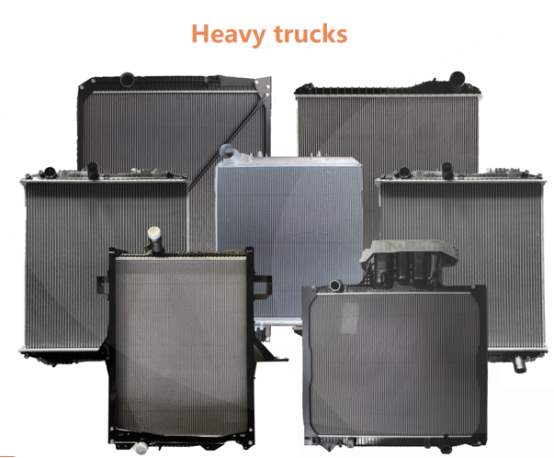
1. Verify Exact Vehicle & OEM Compatibility First
Kenworth (T680, T800, W900, T2000) and Mack (Anthem, Granite, Pinnacle, CL Series) trucks feature highly customized cooling structures with no universal radiator compatibility. Before purchasing, confirm core specifications strictly to avoid fitment errors.
Always match the official OEM part number stamped on the original radiator, which is the most accurate reference for direct replacement. If the part number is missing, verify details via the vehicle VIN, including production year, engine type (Cummins, PACCAR, Mack MP Series), and original cooling parameters. Key fitting details must be fully consistent, including core dimensions, inlet and outlet positions, mounting bracket holes, and transmission cooler port configurations. Never adopt modified or universal radiators, as structural deviations will trigger vibration cracks and coolant leaks during heavy-duty operation.
2. Choose the Right Material: All-Aluminum vs Copper-Brass
Material selection determines radiator cooling stability, service life, and maintenance costs, especially for trucks operating in hot, humid, and dusty environments.
All-Aluminum Brazed Radiator (Top Recommendation)
Modern full-aluminum radiators adopt integral vacuum brazed technology, featuring high thermal conductivity and stable heat dissipation. Compared with traditional copper-brass products, they are 30%–50% lighter, effectively reducing front axle load and improving fuel economy. With professional anti-corrosion surface treatment, aluminum radiators resist oxidation, mineral dust, road salt, and chemical erosion, avoiding scale blockage and corrosion leakage. The integrated structure delivers excellent vibration and shock resistance, perfectly adapting to long-haul highway and rough construction site conditions. It is the most cost-effective choice for most Kenworth and Mack fleet replacements.
Copper-Brass Radiator
Copper-brass radiators have slight thermal conductivity advantages in laboratory environments but show obvious drawbacks in actual heavy-duty scenarios. They are heavy, easy to produce electrochemical corrosion and scale accumulation in high-temperature and humid environments, leading to declining cooling efficiency. In addition, copper-brass structures are prone to welding cracks under long-term vibration, with higher replacement and maintenance costs. They are only suitable for vintage truck restoration or individual ultra-high-load stationary working conditions.
3. Focus on Core Structure & Cooling Performance
The core structure directly decides the radiator’s extreme condition adaptability. For heavy-duty trucks running continuously under high loads, cooling surplus is essential.
First, confirm the core flow type: cross-flow cores are widely used in new Kenworth and Mack models for lower wind resistance and higher heat exchange efficiency, while older models adopt down-flow cores—these two structures cannot be interchanged. Second, select the appropriate tube row number: 1–2 row cores meet standard highway driving demands, while 3-row reinforced cores are strongly recommended for hot climates, mining, construction, and frequent heavy-haul operations to ensure sufficient cooling margin. Meanwhile, high-density fin design optimizes air contact area, and fully brazed seamless integration eliminates weak solder joints, preventing deformation and leakage under severe vibration.
4. Aftermarket vs OEM: Balance Quality & Budget
Genuine OEM radiators offer perfect fitment and original quality but come with high prices, slow delivery, and insufficient spot inventory, increasing fleet downtime costs. Low-end cheap aftermarket radiators have thin cores, unqualified welding processes, and poor anti-corrosion performance, with high failure rates and hidden safety hazards, which are not recommended for heavy-duty trucks.
Premium OE-equivalent aftermarket radiators are the optimal solution. They adopt 100% dimensional replication of OEM standards, precise bracket positioning, and industrial-grade integral brazing technology. With upgraded anti-corrosion coating and 100% pressure leakage testing, they achieve the same fitting and cooling performance as original parts, while offering more competitive prices and faster delivery cycles, perfectly matching the daily replacement needs of global fleets and repair workshops.
5. Essential Features for Harsh Working Conditions
If your Kenworth or Mack trucks operate in deserts, high-temperature areas, mining sites, and bumpy construction roads, prioritize upgraded heavy-duty configurations: reinforced thickened aluminum core and water tanks to resist impact and vibration; enhanced multi-layer anti-corrosion coating to adapt to dusty and humid environments; strict water pressure testing to ensure zero leakage; and formal after-sales warranty support to reduce long-term maintenance risks.
Final Summary
For Kenworth and Mack heavy-duty truck radiator replacement, precise OEM model matching, all-aluminum brazed structure, and high cooling surplus core design are the three core principles. High-quality aftermarket aluminum radiators can completely replace OEM products, delivering stable heat dissipation, longer service life, lower failure rates, and better comprehensive benefits. Choosing the right radiator eliminates engine overheating risks, minimizes fleet downtime, and reduces overall operating costs.
Post time: Jun-25-2026