


An automotive radiator stands as one of the most critical components in a vehicle’s cooling system, serving as the guardian of the engine’s health by maintaining its optimal operating temperature and effectively preventing overheating during both daily commuting and high-load driving scenarios. Internal combustion engines generate an enormous amount of heat when burning gasoline or diesel to produce power, and this excess thermal energy must be efficiently dissipated to avoid catastrophic consequences.
If the heat cannot be removed in a timely manner, it will trigger a series of severe issues: engine knocking that disrupts smooth operation, cylinder deformation that damages core components, rapid deterioration of engine oil that loses its lubricating properties, and even permanent, irreparable damage to the entire engine. As the central heat exchanger of the cooling system, the radiator shoulders the important task of stabilizing the engine temperature across all driving conditions, whether it’s slow urban driving, high-speed highway cruising, or heavy-load operations like climbing or towing.
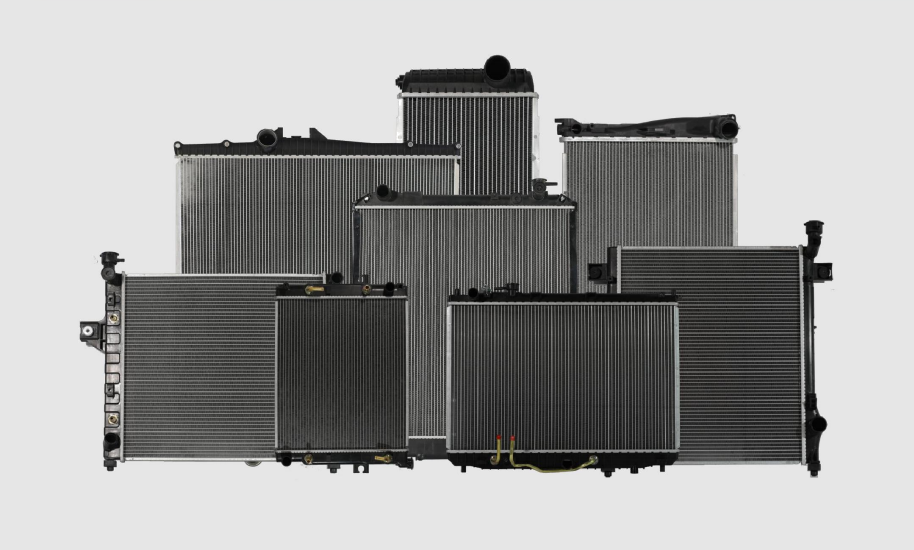
How the Radiator Works: The Cooling Cycle
The working principle of a car radiator is rooted in the basic laws of thermal convection and heat exchange, forming a closed and efficient cooling cycle. The engine’s cooling system circulates a specialized coolant—a carefully formulated mixture of antifreeze, purified water, and corrosion inhibitors—through the intricate passages inside the engine block and cylinder head. As the coolant flows through these hot areas, it absorbs the waste heat generated by combustion and mechanical friction, turning into high-temperature liquid.
This heated coolant then travels through the inlet rubber hose and enters the upper tank of the radiator, ready to release the accumulated heat. Inside the radiator core, dozens of parallel, ultra-thin cooling tubes guide the hot coolant downward, while densely arranged cooling fins are tightly bonded to the outer surface of these tubes. These thin, metallic fins play a pivotal role: they drastically expand the heat exchange area, creating more contact points for heat transfer between the coolant and the outside air.
Heat Dissipation: Air Flow and Fan Assistance
The heat dissipation process unfolds perfectly when air flows through the radiator core. When the vehicle is moving forward at a certain speed, natural wind rushes forcefully through the gaps between the cooling fins and tubes, taking away heat continuously. For situations where the vehicle is stationary, moving at low speed, or operating in high-temperature environments, the electric radiator fan automatically activates in response to signals from the engine temperature sensor.
This fan forces a strong stream of air through the radiator core, compensating for the lack of natural wind. As the cool ambient air passes over the high-temperature tubes and fins, heat is rapidly transferred from the hot coolant to the air through conduction and convection. The cooled coolant then collects in the lower tank of the radiator and is pumped back into the engine by the water pump, initiating a new cycle of heat absorption and dissipation. This continuous loop ensures the engine always stays within the ideal temperature range.
Modern Materials and Design Innovations
Modern automotive radiators have evolved significantly in material and design, replacing traditional copper and brass structures with high-quality aluminum alloy. Aluminum alloy offers distinct advantages: it is much lighter in weight, boasts excellent thermal conductivity for faster heat transfer, and reduces manufacturing costs. This lightweight design helps lower the vehicle’s overall weight, which in turn improves fuel efficiency and reduces carbon emissions.
Additionally, sealed pressure caps are installed on the radiator filler neck. These caps increase the pressure inside the cooling system, effectively raising the boiling point of the coolant. This allows the cooling system to operate efficiently at higher temperatures without the coolant vaporizing, enhancing heat dissipation performance and preventing coolant loss.
Why Regular Radiator Maintenance Matters
Understanding the working principle and importance of the radiator is essential for every car owner, as it highlights the necessity of regular maintenance. Cooling fins blocked by dust, insects, or debris, aging and degraded coolant, cracked or leaking hoses, or a malfunctioning radiator fan will all directly reduce heat dissipation efficiency and put the engine at risk.
A well-maintained radiator not only ensures stable and efficient engine performance but also extends the service life of the entire power system. Especially during the hot summer months or long-distance road trips, a properly functioning radiator is the key to safe and reliable driving, making it an indispensable part that no vehicle can do without.
(E.)
Post time: May-06-2026