


Automotive radiator faults are one of the most common causes of engine overheating failure. As the core component of the vehicle cooling system, the radiator is responsible for absorbing and dissipating the high heat generated by engine operation, ensuring that the engine always works within a normal temperature range. Once the radiator fails, the engine cannot be cooled effectively, which will not only affect power output and fuel consumption, but also cause serious failures such as cylinder pad damage, cylinder deformation and even engine scrap. Typical problems include external blockage, internal scaling, liquid leakage, fan mismatch and core deformation. These faults have different characteristics and formation reasons, and it is easy to be misjudged in maintenance. Understanding common fault phenomena and mastering targeted troubleshooting methods can help maintenance personnel quickly locate problems, reduce maintenance time, avoid detours, and complete efficient repair and replacement.
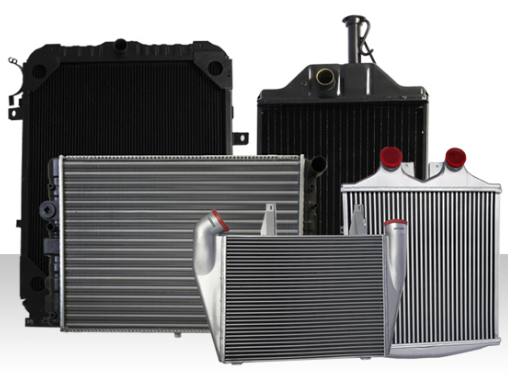
Poor Heat Dissipation Caused by External Blockage
The first common fault is poor heat dissipation caused by external blockage. After long-term driving on urban roads, highways or rural roads, the radiator fin gap is easily blocked by a mixture of dust, flying insects, fallen leaves, sediment and plastic debris. These attachments cling to the surface of the radiator, blocking the air passage and seriously reducing the effect of air convection heat dissipation.
Water temperature is normal during high-speed driving because the natural wind is strong enough to take away part of the heat, but the temperature rises rapidly during idling and traffic jams.
Clean the fin surface with soft low-pressure water flow, remove accumulated debris, and straighten bent cooling fins gently with special tools to restore the heat dissipation area.
Internal Scaling and Pipeline Blockage
Internal scaling and pipeline blockage is the second frequent fault, which is mostly caused by improper daily maintenance. Long-term use of unqualified coolant or direct addition of tap water will lead to a large number of minerals and impurities in the water. Under high temperature environment, these substances will form scale and rust and adhere to the inner wall of the cooling pipe, gradually narrowing the coolant flow channel and even causing local blockage.
Engine temperature rises rapidly under load, heater output wind in the car becomes weak, and the temperature difference between the inlet and outlet of the radiator is too large.
Clean the cooling system with special detergent. If scaling is serious and the pipeline is blocked, direct radiator replacement is more reliable and safer than simple cleaning.
Leakage — Cracking, Gasket Aging & Perforation
Leakage is another typical fault that occurs frequently, including water tank cracking, gasket aging, tube perforation and loose joints.
Rapid loss of coolant, obvious white water stains and crystallized marks around the radiator and pipelines, and a special sweet smell of coolant in the engine compartment.
Minor leakage can be temporarily relieved with professional sealing agent, but it is not a long-term solution. For large-area cracking, serious corrosion and perforation of the core body, the entire radiator assembly must be replaced to ensure driving safety.
Fan Mismatch & Electrical Component Failure
Mismatched radiator fan speed, damaged fan relay, faulty temperature sensor and loose connector will also cause abnormal engine temperature. Even if the radiator itself is intact, without sufficient forced airflow, the heat dissipation efficiency will be greatly reduced, resulting in high temperature at idling and low speed.
Even if the radiator itself is intact, without sufficient forced airflow, the heat dissipation efficiency will be greatly reduced, resulting in high temperature at idling and low speed.
Check fan rotation speed, relay, fuse and temperature switch together when troubleshooting overheating faults to ensure the coordinated operation of the entire cooling system.
Summary & Maintenance Recommendations
Summarizing typical radiator fault cases helps maintenance personnel and car owners quickly judge the root cause, avoid blind disassembly and unnecessary parts replacement, and save maintenance costs. Timely handling of minor faults can effectively extend radiator service life, while severe aging, deformation and irreparable damage must be replaced with qualified products in time to protect the engine from permanent damage and ensure the stability and safety of vehicle operation.
(E.)
Post time: May-06-2026